
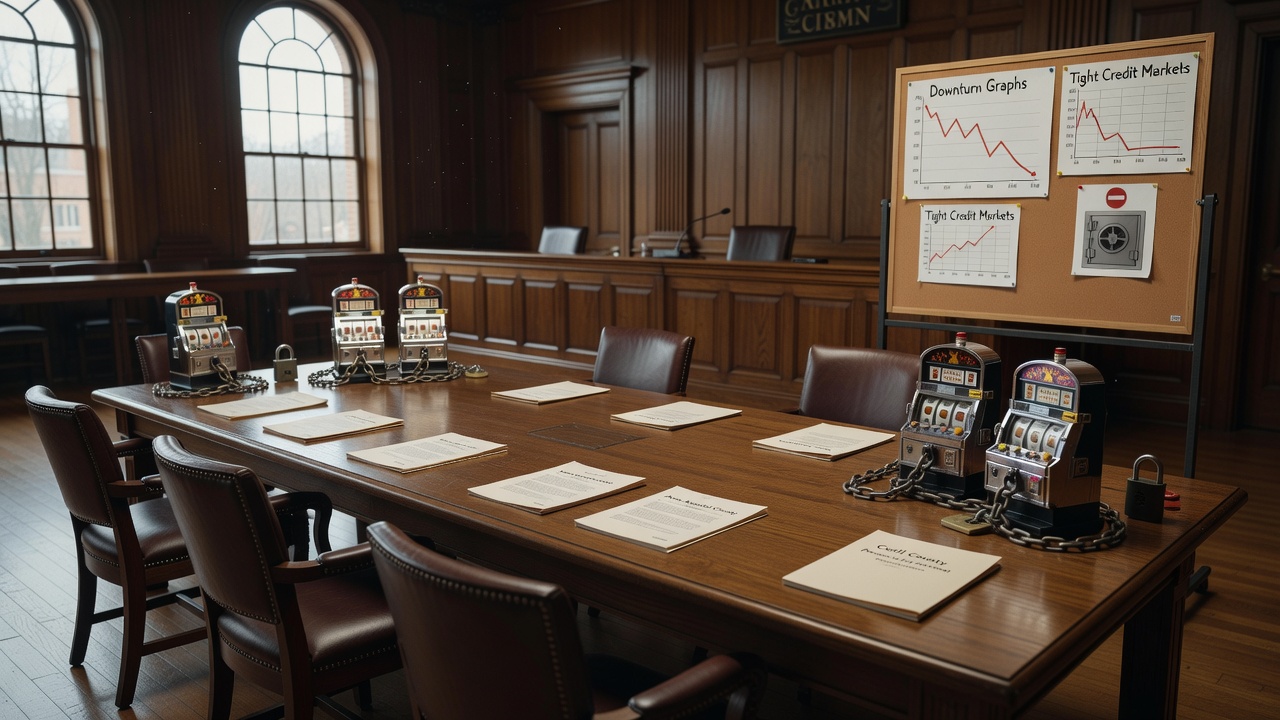
Maryland's long-anticipated slot machine expansion has stumbled out of the gate. State officials opened just six bids covering five of the state's authorized gaming locations, a turnout that falls well short of what lawmakers and gaming regulators had anticipated when voters approved the program last November.
Combined, the six bids propose 10,555 slot machines - roughly two-thirds of the 15,000-machine ceiling set by the ballot measure. Only one site, in Anne Arundel County, attracted competing bids, meaning most of the proposed venues will move forward, if at all, without any competitive pressure on their applications.
Why the Interest Fell Short
Deutsche Bank gaming analyst Bill Lerner pointed to a combination of factors depressing bidder turnout: a strained national economy and a steep 67 percent tax rate on gross gaming revenue. That tax rate ranks among the highest applied to slot machine operations in the country, and it directly affects the math operators use to decide whether a license is worth pursuing. High effective tax burdens compress margins, which in turn limits how much capital a company can justify committing to construction, staffing and marketing in a new jurisdiction.
Donald Fry, chairman of Maryland's gaming commission, acknowledged that broader economic conditions played a role. Credit markets were tight at the time, making it harder for operators to finance large casino projects even in jurisdictions with more favorable tax structures. Maryland's timing, launching a capital-intensive licensing process during a downturn, compounded the tax rate's dampening effect on bidder appetite.
A Notable Absence of Major Operators
Penn National Gaming was the only established gaming company to submit a bid, proposing a $75 million, 500-slot machine facility in Cecil County, with potential expansion to 1,000 machines. That figure sits well under the 2,500 machines authorized for the site, suggesting even the one major player willing to enter the market wanted to limit its initial exposure.
Perhaps more telling: no operator with Las Vegas roots submitted a bid. The absence of established Nevada-based gaming companies signals that, under the terms on offer, Maryland's opportunity did not look attractive enough to compete with other expansion options available to national operators at the time.
What It Means for Maryland's Gaming Rollout
House Speaker Michael Busch described the results as a reasonable starting point, but outside observers were less generous. A Bethesda-based gaming analyst told the Baltimore Sun the low bid count would be "highly disappointing" to state officials who had built revenue projections around a more robust rollout.
The gap between authorized capacity and actual bids carries real policy consequences. State budget planning tied to gaming revenue depends on machines actually being installed and operated, not simply authorized. A shortfall in licensed locations and machine counts means slower revenue ramp-up, and it may prompt lawmakers to revisit the tax structure or licensing terms in future sessions if the pattern persists.
- Six bids were submitted for five slot locations, with only Anne Arundel County drawing more than one proposal.
- Combined bids cover 10,555 machines against a legal cap of 15,000.
- A 67 percent tax rate on gross gaming revenue was cited as a key deterrent for operators.
- Penn National Gaming was the sole major operator to bid, proposing a Cecil County facility well below its authorized machine limit.
For consumers, a slower rollout means slot machine availability in Maryland will expand more gradually than originally planned, with fewer venues and operators shaping the early market. As with any expansion of commercial gambling, the structural details, tax policy, licensing terms, operator incentives, matter as much as the headline numbers in determining how the industry actually takes shape on the ground.