
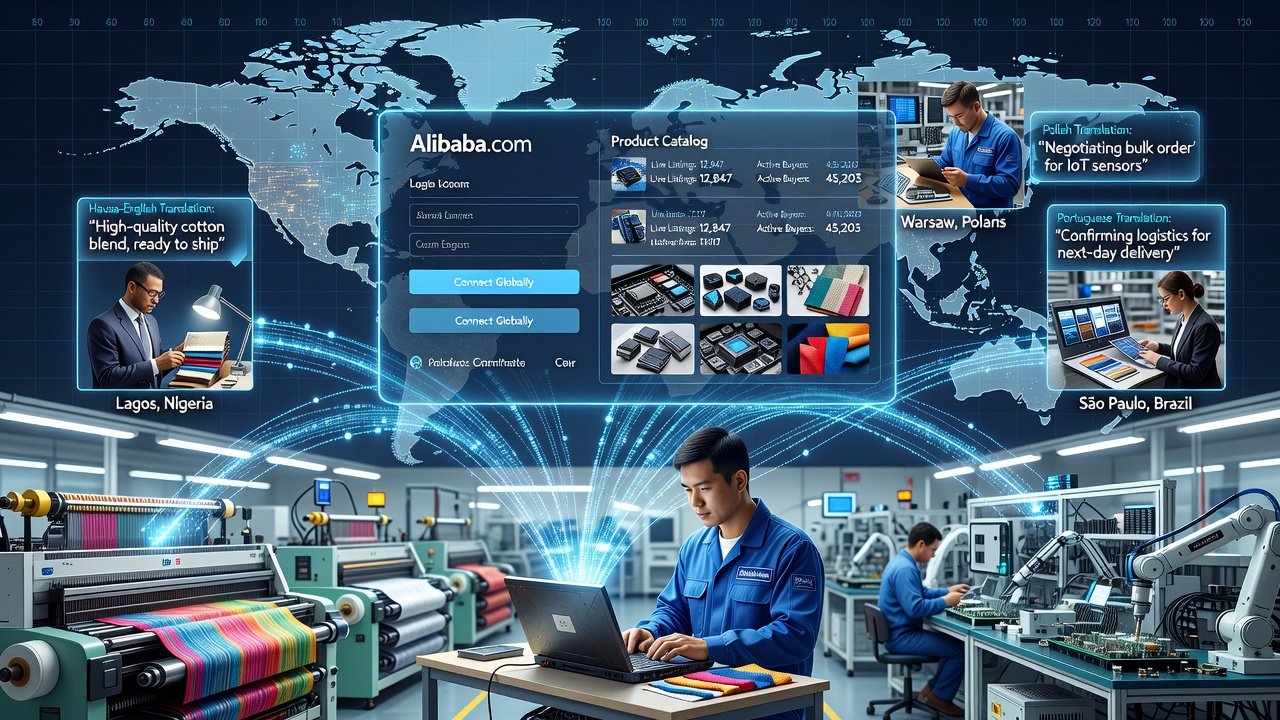
A single supplier profile on Alibaba can connect a small manufacturer in Zhejiang province to a buyer placing orders from Lagos, Warsaw, or São Paulo within hours of listing a product. That kind of reach used to require export licenses, trade shows, and years of relationship-building. Now it happens through a login screen and a product catalog.
What makes this possible isn't luck or timing - it's a deliberately engineered set of Alibaba platform features built to remove friction between manufacturers and buyers who would otherwise never find each other. Some sellers stumble onto these tools while researching unrelated topics, occasionally landing on entertainment platforms like the one behind ali baba features, before realizing the actual business platform operates on a completely different model built around trade, not games. The confusion is understandable given how many products carry the Alibaba name, but the core marketplace remains a serious commercial infrastructure serving millions of transactions.
This piece breaks down how the platform actually functions - from account setup to fulfillment - and what separates sellers who thrive from those who list a few products and disappear. We'll look at the seller-side mechanics, the buyer-facing advantages, and the broader business solutions that turn a marketplace listing into a functioning international supply chain.
Understanding the Alibaba Ecosystem
Before evaluating tools or strategies, it helps to understand what Alibaba actually is - because the name covers more ground than most newcomers expect. The parent company operates several distinct platforms, each serving a different transaction type and audience.
B2B vs B2C Models Within Alibaba
Alibaba.com functions primarily as a business-to-business marketplace, connecting wholesale buyers with manufacturers and trading companies, typically in bulk quantities. This differs sharply from Taobao and Tmall, which serve consumer-facing retail in the Chinese domestic market. AliExpress, meanwhile, bridges the gap - allowing smaller-quantity purchases direct from Chinese suppliers to individual consumers worldwide. Understanding which platform you're actually using matters enormously, since sourcing strategies, minimum order quantities, and negotiation norms differ across each.
Global Reach and Supplier Network
The supplier base spans manufacturing hubs across China, India, Vietnam, and increasingly other Southeast Asian and South Asian economies. Buyers gain access to categories ranging from raw industrial materials to finished consumer electronics, apparel, and machinery. This breadth is precisely what gives the platform its structural advantage: a buyer sourcing custom packaging doesn't need a separate relationship with a different supplier for electronics components - both exist within the same searchable ecosystem.
Platform Evolution Over Two Decades
What started as a directory-style listing service in the late 1990s has grown into an integrated commercial infrastructure incorporating payment processing, logistics coordination, and dispute resolution. Each expansion phase added a layer of trust mechanism, because early cross-border trade suffered from exactly the problems you'd expect - payment fraud, quality misrepresentation, and shipment delays. The platform's current feature set reflects two decades of patching those specific pain points.
Core Alibaba Platform Features Every User Should Know
The functional backbone of the marketplace consists of several interlocking systems. Knowing how they work - not just that they exist - determines whether a buyer or seller extracts real value from the platform.
Product Search and Filtering Capabilities
Buyers can filter listings by minimum order quantity, supplier location, response rate, years of operation, and verification status. This granularity matters because it lets a buyer eliminate suppliers who don't match their scale or timeline before ever initiating contact - a significant time saver compared to cold outreach.
Trade Assurance and Buyer Protection
Trade Assurance functions as an escrow-style protection mechanism: payment is held until the buyer confirms the order matches agreed specifications for quality and shipping time. If it doesn't, the buyer can file a claim and recover funds. This single feature addresses the historical trust gap that once made cross-border sourcing risky for buyers with no way to inspect goods before payment.
Verified Supplier Programs
Verification tiers - including onsite checks, business license confirmation, and third-party audits - give buyers a way to gauge supplier legitimacy without visiting a factory in person. Higher verification levels typically correlate with more consistent production capacity and cleaner compliance records, though buyers should still request samples regardless of badge status.
Multi-Language and Currency Support
Real-time translation tools and multi-currency pricing remove two of the biggest historical barriers to cross-border trade. A buyer in Brazil can negotiate in Portuguese while a supplier responds in Mandarin, with the platform handling translation in both directions - imperfect at times, but functional enough to close deals.
Essential Alibaba Seller Tools for Business Growth
Sellers who treat their storefront as a static catalog rarely grow. Those who actively use the available tool set tend to outperform passive listers by a wide margin, because the platform rewards engagement and responsiveness.
Storefront Customization Options
Sellers can build branded mini-sites within the platform, complete with custom banners, categorized product groupings, and company profile pages. A well-organized storefront reduces buyer hesitation - it signals operational maturity rather than a fly-by-night operation.
Analytics Dashboard and Performance Metrics
The seller dashboard tracks inquiry volume, conversion rates, response time, and keyword performance within the marketplace's internal search. Sellers who monitor these metrics weekly can identify which product listings underperform and adjust pricing, imagery, or descriptions accordingly rather than guessing.
Advertising and Promotional Tools
Paid placement options - including keyword bidding and featured listing slots - let sellers push visibility for specific products during peak buying seasons. This works similarly to other pay-per-click advertising models, where budget allocation directly correlates with impression volume, though conversion still depends on listing quality.
Inventory and Order Management Systems
Integrated order tracking lets sellers manage bulk purchase orders, monitor production timelines, and coordinate shipping schedules from a single interface. For manufacturers juggling dozens of simultaneous orders, this centralization prevents the kind of miscommunication that damages buyer relationships.
- Real-time inquiry notifications to reduce response lag
- Automated quotation templates for repeat product categories
- Bulk product upload tools for large catalogs
- Integrated messaging with file-sharing for specification documents
Alibaba Marketplace Benefits for Buyers and Sellers
The value proposition differs depending on which side of the transaction you occupy, but both parties benefit from the same underlying infrastructure of trust-building and scale.
Cost Efficiency and Bulk Pricing Advantages
Buyers purchasing at volume typically access pricing tiers unavailable through retail channels, since manufacturers can offer discounts justified by production economies of scale. Sellers, in turn, gain access to demand aggregation - multiple small buyers requesting similar products can sometimes be batched into a single, more efficient production run.
Access to Diverse Product Categories
Few sourcing channels match the category breadth available here. A buyer building a private-label skincare line and another sourcing industrial fasteners can both find qualified suppliers within the same platform, without needing separate trade relationships or intermediaries for each vertical.
Risk Mitigation Through Platform Guarantees
Beyond Trade Assurance, dispute resolution teams mediate disagreements over quality, delivery timing, and specification mismatches. This structured process gives both parties recourse that wouldn't exist in a purely informal, unregulated trade relationship.
Comprehensive Alibaba Business Solutions
Sourcing a product is only the first step. The platform's broader value comes from solutions that address what happens after a deal closes.
Logistics and Fulfillment Services
Freight forwarding partnerships, customs documentation support, and warehousing options reduce the operational burden on smaller buyers who lack in-house logistics expertise. This matters especially for first-time importers unfamiliar with tariff classifications and shipping documentation requirements.
Payment Processing and Financial Tools
Integrated payment gateways support letters of credit, wire transfers, and platform-secured payment methods, giving buyers flexibility based on order size and risk tolerance. Larger transactions often favor structured payment terms - partial deposit upfront, balance on shipment confirmation - which the platform's tools help formalize.
Supply Chain Management Integration
Enterprise buyers can integrate procurement workflows directly with platform data, syncing supplier lead times and inventory forecasts into their own resource planning systems. This reduces manual data entry and shortens the gap between demand signals and reorder decisions.
Alibaba E-Commerce Services for Modern Businesses
Beyond sourcing and fulfillment, a layer of supporting services helps businesses operate more efficiently once products are moving.
Digital Marketing and Brand Building Support
Sellers can access co-marketing opportunities, participate in platform-run trade events, and build brand credibility through verified badges and customer review systems - all of which compound over time into stronger buyer trust.
Customer Relationship Management Features
Built-in messaging histories, repeat-buyer tagging, and automated follow-up reminders help sellers maintain relationships beyond a single transaction, which matters enormously in B2B trade where repeat orders often represent the bulk of long-term revenue.
Mobile App Functionality for On-the-Go Management
The mobile app mirrors most desktop functionality, letting sellers respond to inquiries, check order status, and approve shipments without being tied to a desk - a practical necessity for suppliers managing factory floor operations alongside sales responsibilities.
Frequently Asked Questions
Is Alibaba safe for first-time international buyers?
Yes, provided buyers use Trade Assurance and verified suppliers rather than dealing entirely outside the platform's protection mechanisms. Requesting samples before committing to a bulk order remains the single best practical safeguard against quality disputes.
What's the difference between Alibaba and AliExpress?
Alibaba serves bulk, wholesale B2B transactions with negotiated pricing and minimum order quantities, while AliExpress caters to individual consumers buying single units or small quantities at fixed retail prices. Sourcing strategy and expected lead times differ significantly between the two.
How much does it cost to become a seller on Alibaba?
Costs vary based on membership tier, ranging from basic free listings with limited visibility to paid gold supplier memberships that include verification, enhanced storefront features, and advertising credits. Sellers should weigh the membership cost against expected order volume before upgrading.
Can small businesses realistically compete with larger sellers on the platform?
Yes, particularly in niche categories where responsiveness and product specialization matter more than sheer catalog size. Consistent communication, accurate product listings, and fast quote turnaround often outweigh the advantage of scale alone.
How does Trade Assurance actually protect a buyer's payment?
Funds are held by the platform rather than released directly to the seller until the buyer confirms the shipment meets agreed terms for quality, quantity, and delivery timeline. If issues arise, buyers can open a dispute claim and request a refund through the platform's resolution process rather than negotiating directly with an unresponsive seller.
Do I need a business license to buy or sell on Alibaba?
Buyers generally don't need a formal business license to place orders, though larger transactions may require one for customs and import documentation depending on the destination country. Sellers, particularly those seeking verified supplier status, typically must provide business registration documents during the verification process.