
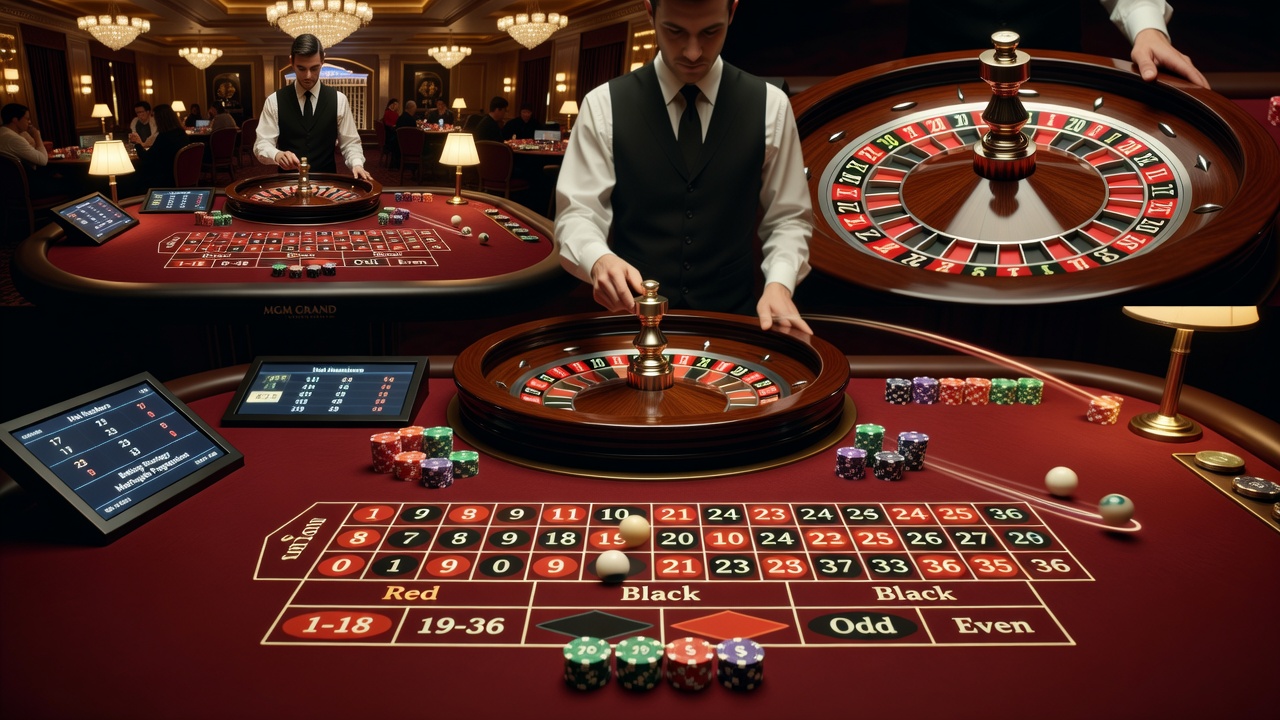
A single roulette wheel contains thirty-seven or thirty-eight pockets, depending on the variant, and that small difference changes the house edge by nearly two full percentage points. Most players never stop to consider how much this detail matters, yet it separates a mediocre session from a mathematically sound one. Live dealer roulette has turned a game once confined to physical casino floors into a broadcast experience that combines chance, psychology, and technology in ways that reward players who understand what they're actually watching.
What makes the current generation of live tables different from their early digital predecessors is the attention paid to sensory detail. Studio lighting, wheel acoustics, and dealer timing are engineered to replicate the tension of a real casino floor rather than a sterile random number generator. Players who want to study the specific mechanics behind one of these setups can review the immersive roulette rules published by the platform, which outline camera angles, betting windows, and payout structures in detail. Understanding those rules before placing a single chip changes how a session unfolds, because timing and table etiquette carry real weight in live formats.
This piece breaks down what separates a genuinely immersive live roulette setup from a generic digital table, how betting strategy actually interacts with probability, and what the numbers say about your odds regardless of which variant you choose. None of this requires prior gambling expertise - just a willingness to look past the spinning wheel and into the mechanics behind it.
What Makes Roulette Gameplay Truly Immersive
Immersive roulette gameplay isn't a marketing label - it describes a specific set of production choices that close the gap between a screen and a casino floor. The difference shows up in camera work, audio design, and how the dealer manages pacing under a live audience of remote players.
Multi-Camera Angles and Real-Time Wheel Physics
Standard digital roulette relies on a random number generator with no physical wheel at all. Live dealer roulette flips that model entirely: a real wheel spins, a real ball drops, and multiple cameras capture the action from angles that let players verify the outcome themselves. Close-up shots on the ball's final bounce, wide shots of the table layout, and slow-motion replays after each spin all serve one purpose - proving the result is genuine rather than simulated.
Dealer Interaction and Studio Production Quality
A skilled live dealer does more than spin a wheel. They set pacing, acknowledge player chat, and maintain the rhythm that makes a session feel like a shared event rather than a solitary click-through. Production teams invest in soundproofed studios, professional lighting rigs, and broadcast-grade audio specifically because these details determine whether a session feels authentic or artificial.
Sound Design and Visual Fidelity
The click of the ball against wheel deflectors, the shuffle of chips, the ambient hum of a studio floor - these auditory cues aren't accidental. They're calibrated to trigger the same sensory response a physical casino produces, which is why sound design has become as important as video resolution in live game production.
Recreating a Realistic Casino Atmosphere Online
A realistic casino atmosphere depends on far more than visual polish. It's built from environmental cues that mimic the psychological experience of sitting at a physical table, surrounded by other players and the low murmur of a casino floor.
Studio Design and Lighting That Mirror Land-Based Casinos
Production studios for live roulette are modeled directly on physical casino pit layouts. Warm lighting, felt-covered tables, and branded wheel housings are chosen deliberately to avoid the flat, generic look of early online casino graphics. This attention to physical staging is part of why live formats have overtaken purely digital roulette variants in player preference.
Live Chat and Social Presence at the Table
Unlike a solitary digital spin, live tables allow players to see and respond to others betting in real time. This social layer - chat windows, visible bet totals, dealer greetings - recreates the communal tension of a crowded casino pit, where watching someone else's win or loss shapes your own emotional read on the game.
Consistency Across Devices and Connection Quality
Atmosphere collapses quickly if video stutters or audio lags. Studios invest heavily in adaptive streaming technology so the experience holds up whether a player connects from a desktop on fiber broadband or a phone on mobile data. Consistency, not just initial polish, is what keeps the atmosphere convincing over a long session.
Interactive Betting Strategies for Live Roulette
Strategy in roulette doesn't change the underlying odds, but it does change how a player manages bankroll, risk exposure, and session length. Interactive betting strategies take advantage of live formats that let players adjust wagers in real time based on table history and dealer pacing.
Progressive Betting Systems: Martingale and Fibonacci
The Martingale system doubles a bet after every loss, aiming to recover previous losses with a single win. The Fibonacci system follows a more gradual sequence, increasing bets according to the Fibonacci number series rather than doubling outright. Both systems manage bankroll risk differently, but neither alters the house edge - they only reshape the pattern of wins and losses across a session.
Flat Betting and Bankroll Preservation
Flat betting keeps wager size constant regardless of previous outcomes. It's less exciting than progressive systems but far more predictable for players managing a fixed bankroll over an extended session. Many experienced players treat flat betting as the default and reserve progressive systems for short, controlled bursts.
Adapting Strategy to Live Table Pacing
Live dealer tables move at a fixed rhythm dictated by the dealer, not the player. This changes strategic decision-making because players can't rush or slow a spin the way they might on an automated digital table. Reading dealer pacing and betting windows becomes part of the strategic calculation itself.
- Set a loss limit before the session begins and treat it as non-negotiable
- Track outside bets (red/black, odd/even) separately from inside bets (single numbers, splits)
- Avoid chasing losses by increasing bet size beyond your predetermined limit
Roulette Game Probability Guide: Understanding the Odds
Every roulette strategy, however well designed, operates within fixed mathematical boundaries. A roulette game probability guide exists to clarify exactly what those boundaries are, because misunderstanding them is the single most common reason players overestimate their long-term chances.
European vs. American Wheel: The House Edge Difference
European roulette has thirty-seven pockets, including a single zero. American roulette adds a second zero, bringing the total to thirty-eight. That extra pocket increases the house edge from roughly 2.7% on European wheels to about 5.26% on American wheels. Choosing the European variant whenever it's available is one of the simplest, most effective probability-based decisions a player can make.
Inside Bets vs. Outside Bets: Risk and Payout Ratios
Inside bets - straight-up numbers, splits, corners - offer higher payouts because they carry lower odds of hitting. Outside bets, like betting on red or black, pay less but hit far more frequently. Neither category offers a better long-term expected value than the other; they simply distribute risk differently across a session.
Why No Betting System Beats the House Edge
Every spin is an independent event. Previous results have no influence on future outcomes, regardless of how many times a specific number or color has appeared in a row. Betting systems can smooth variance and control bankroll exposure, but none of them alter the fixed statistical edge built into the wheel itself.
Choosing the Best Live Dealer Roulette Experience
Not every live dealer roulette experience is built to the same standard. Differences in streaming quality, dealer professionalism, table limits, and available variants all affect whether a session feels worthwhile.
Evaluating Stream Quality and Table Availability
Look for platforms offering multiple simultaneous tables with different betting limits, since this flexibility lets players match table stakes to their bankroll rather than settling for a single fixed-limit option. Stream resolution and latency also matter directly - a delayed feed disrupts the timing needed to place bets before the window closes.
Variant Selection: Speed Roulette, Multi-Wheel, and Classic Formats
Speed roulette variants shorten the time between spins for players who prefer faster-paced sessions, while multi-wheel formats let players track several wheels simultaneously. Classic formats retain the traditional pacing found in physical casinos, which suits players prioritizing atmosphere over speed.
Mobile Compatibility and Cross-Device Continuity
Increasingly, players expect to start a session on desktop and continue it on mobile without losing table history or bet tracking. Platforms that handle this transition smoothly tend to retain players longer, simply because the friction of switching devices no longer breaks session continuity.
Frequently Asked Questions
Is live dealer roulette fairer than digital roulette with a random number generator?
Both formats are regulated and audited when offered through licensed platforms, so neither is inherently "fairer" in a mathematical sense. Live dealer roulette does offer visual verification of each spin through multiple camera angles, which some players find more reassuring than trusting an unseen algorithm.
Does betting strategy actually improve my odds of winning?
No betting strategy changes the fixed house edge built into the wheel. Strategies like Martingale or flat betting affect how your bankroll is distributed across a session, not the underlying probability of any single spin.
Why does the European wheel have better odds than the American wheel?
The European wheel has one zero pocket instead of two, which lowers the house edge to roughly 2.7% compared to about 5.26% on the American wheel. This single structural difference is the most significant factor affecting long-term player returns.
How much bankroll should I set aside for a live roulette session?
A common practical approach is to set a fixed loss limit before starting - an amount you're fully prepared to lose without financial or emotional strain - and stop once that limit is reached, regardless of recent wins or losses.
Can I switch between betting strategies mid-session?
Yes, and many experienced players do exactly this, starting with flat betting to gauge table pacing before shifting to a progressive system during a favorable streak. The key is deciding on switch conditions in advance rather than reacting impulsively to short-term results.
What should I check before choosing a live dealer platform?
Confirm the platform holds valid licensing, review available table limits and variants, and test stream quality during a low-stakes session before committing larger bets. Reading the specific rules for each variant beforehand also prevents confusion about betting windows and payout structures once a session is underway.