
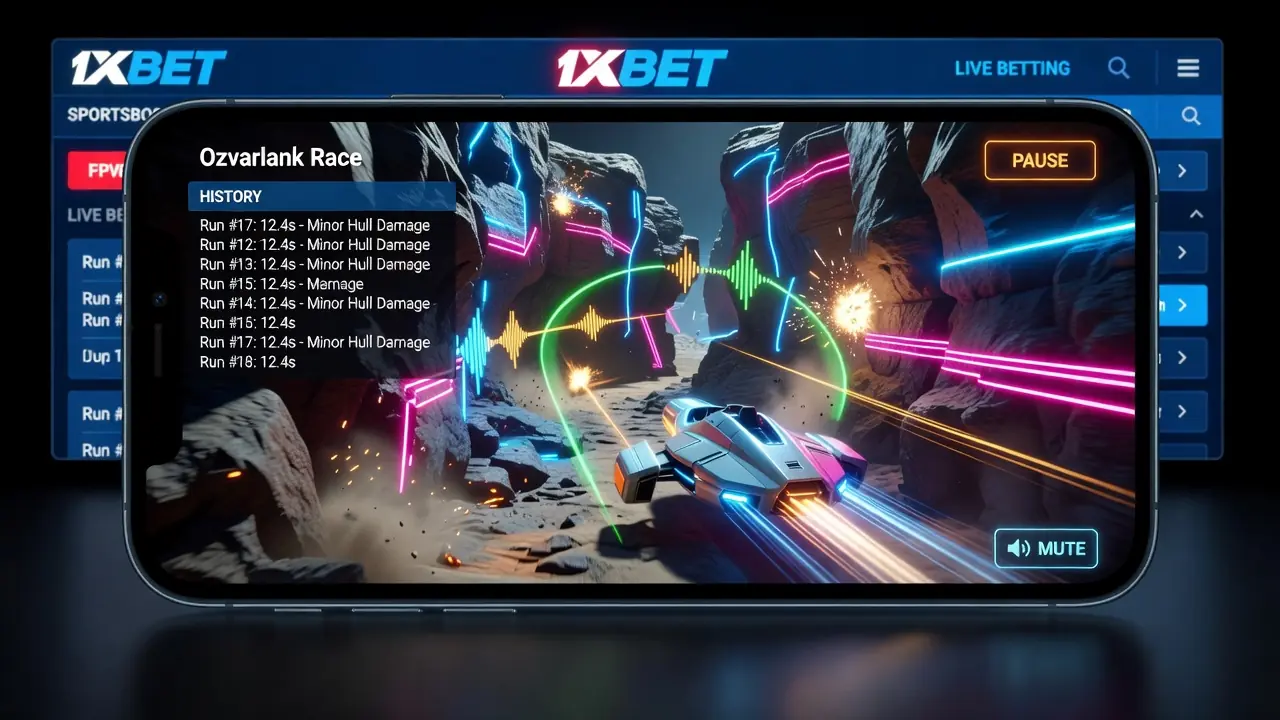
1xbet has introduced an arcade flight mini-game called Ozvarlank Race, embedded within its mobile app and branded sportsbook environment. The addition reflects a broader pattern among betting operators: using lightweight, skill-based games to keep users inside the app between wagers. Rather than a betting product in itself, this is a retention tool dressed up as entertainment.
What the mini-game actually is
The mechanic is straightforward. A player steers a craft through a scrolling canyon, dodging moving wall gaps and avoiding hull damage while trying to cover as much distance as possible. Controls rely on drag-based steering, with visual and audio cues signaling proximity to obstacles. There is a saved history of past runs, a pause overlay, and a mute toggle - standard conveniences for casual mobile games. None of this involves wagering mechanics, odds, or payouts; it is a skill-and-reflex arcade title layered onto the 1xbet app interface.
Why betting platforms build games like this
Sportsbooks and casino apps increasingly compete on engagement time, not just on betting markets or odds pricing. A mini-game with no monetary stake gives operators a way to extend session length, reinforce brand presence, and create a reason to open the app outside of active betting windows. This is a known pattern in digital entertainment more broadly: companies embed low-stakes, replayable content to build habitual usage. For a betting operator, every extra minute spent inside the app is an opportunity for cross-promotion toward sports markets or casino products, even if the mini-game itself carries no financial risk.
Where the line matters for users
It is worth being precise about what this feature is and is not. Ozvarlank Race does not involve betting, deposits, or in-game purchases tied to real money, based on the description provided. That distinguishes it from gamified betting products that blend reward loops with actual wagering, which regulators in several jurisdictions have scrutinized for blurring the line between entertainment and gambling. Still, embedding any game inside a betting app is not neutral design. It normalizes frequent app engagement and keeps a gambling brand present in moments that have nothing to do with placing a bet. Consumers using 1xbet or similar platforms should treat such features as separate from betting activity itself, and operators should keep that separation clear and auditable, particularly given ongoing regulatory attention to how betting apps structure engagement features and user interfaces.
The broader product trend
Arcade mini-games inside betting apps sit at the intersection of gaming technology and user-acquisition strategy. They cost little to develop relative to sportsbook infrastructure, they generate app-store-style engagement metrics, and they give marketing teams fresh content to promote without touching regulated betting products directly. For an industry under consistent pressure around advertising standards and responsible-gambling expectations, low-risk entertainment features are an easier sell than new betting promotions. Whether that trend expands depends partly on how regulators classify these hybrid features going forward, and partly on whether users respond to them as genuine entertainment rather than another layer of app retention engineering.