
Online sports betting runs on a vocabulary that can intimidate newcomers before they place a single wager. Odds formats, margins, bet types, and payment rules each carry financial implications that are not always obvious at first glance. Understanding this terminology is less about mastering a hobby and more about reading the fine print of a product that moves real money.
How Odds Actually Work
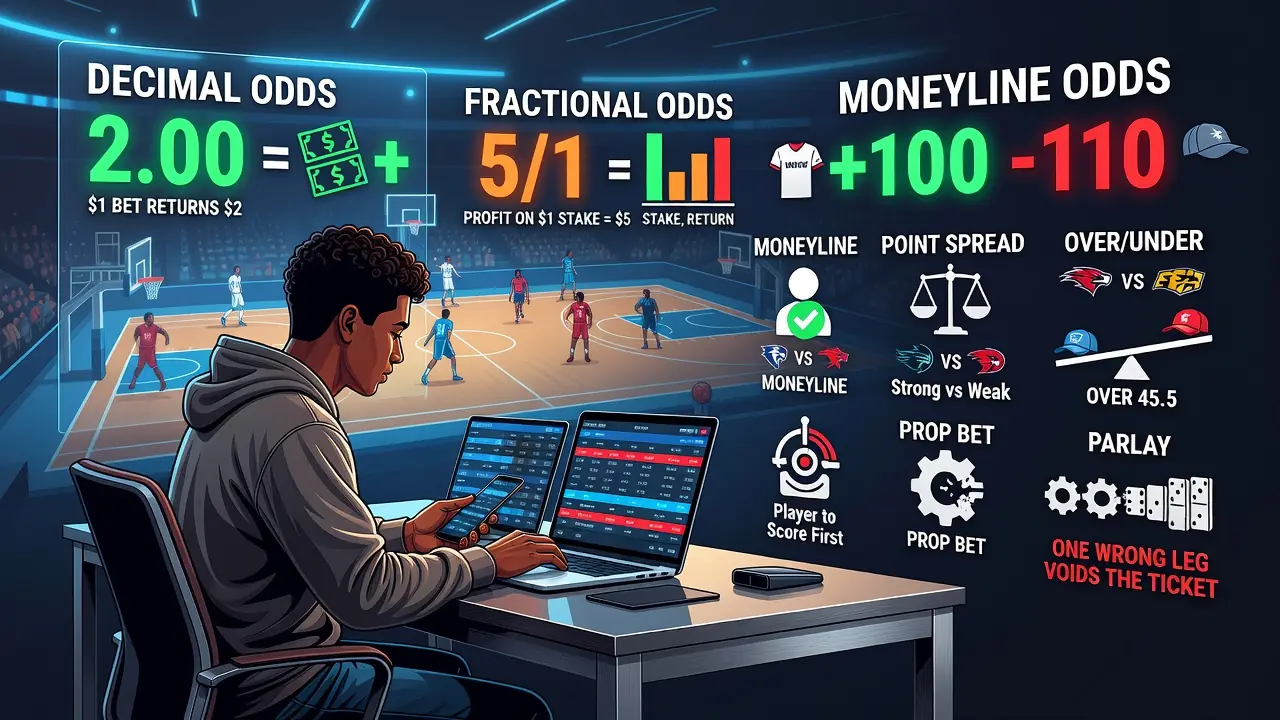
Odds are the mechanism through which a bookmaker prices risk and determines potential payouts. Three formats dominate the market: decimal, fractional, and moneyline. Decimal odds, common in Europe and increasingly standard on international platforms, show the total return per unit staked - a figure of 2.00 means a $1 bet returns $2 if successful, stake included. Fractional odds, traditional in the UK, express profit relative to stake, so 5/1 means a $1 bet yields $5 in profit. Moneyline odds, standard in the United States, use positive and negative numbers to indicate profit on a $100 stake or the stake required to profit $100, respectively. None of these formats change the underlying probability a bookmaker has assigned to an outcome - they simply present it differently.
Margins, Juice, and the Economics of Odds-Setting
Behind every set of odds sits a built-in commission, often called "juice" or "vig." Bookmakers do not offer odds that reflect true probability; they shade them slightly so that, across all outcomes, the operator retains an edge regardless of result. This margin is how the business model sustains itself - it is not a flaw in the system but its foundation. A lower margin generally means better value for the bettor over time, which is why comparing odds across operators matters more than brand loyalty. No amount of research eliminates this structural edge; it only affects how much of it a bettor pays.
Common Bet Types and What They Mean for Risk
Different bet structures carry different risk profiles, and conflating them is a frequent beginner mistake.
- Moneyline bets reward correctly picking a winner outright, with no scoring margin involved.
- Point spread bets require a favored team to win by more than a set margin, effectively equalizing two mismatched sides.
- Over/under bets focus on combined scoring totals rather than who wins.
- Prop bets isolate specific in-game events, often with less analytical history behind the pricing.
- Parlays link multiple selections for higher potential returns, but a single incorrect leg voids the entire wager - a structure that statistically favors the operator more than single bets do.
Live Betting and the Pressure of Real-Time Odds
In-play betting lets users wager after an event has started, with odds recalculated continuously based on unfolding action. This format has grown largely because mobile technology makes real-time pricing feasible at scale. It also compresses decision-making time, which can push bettors toward impulsive choices rather than considered ones - a dynamic regulators and responsible-gambling advocates have flagged as worth monitoring.
Payments, Mobile Apps, and Account Verification
Deposit and withdrawal mechanics are not a footnote - they are where licensing and consumer protection become tangible. Reputable operators support verified payment channels such as cards, e-wallets, bank transfers, and regional methods, and they require identity verification before releasing withdrawals. This is a compliance safeguard tied to anti-money-laundering rules, not an inconvenience. Mobile apps have become the primary access point for most bettors, and the better-regulated ones are transparent about fees, processing times, and withdrawal limits rather than burying them in terms and conditions.
Reading the Landscape Responsibly
None of this vocabulary changes the basic reality that sports betting outcomes are uncertain and margins favor the house over time. Familiarity with odds formats, bet structures, and payment safeguards helps a bettor understand what they are actually agreeing to - not how to beat the system. Setting personal limits, checking that an operator is licensed in the relevant jurisdiction, and treating betting as entertainment rather than income remain the most practical forms of protection available to any beginner.