
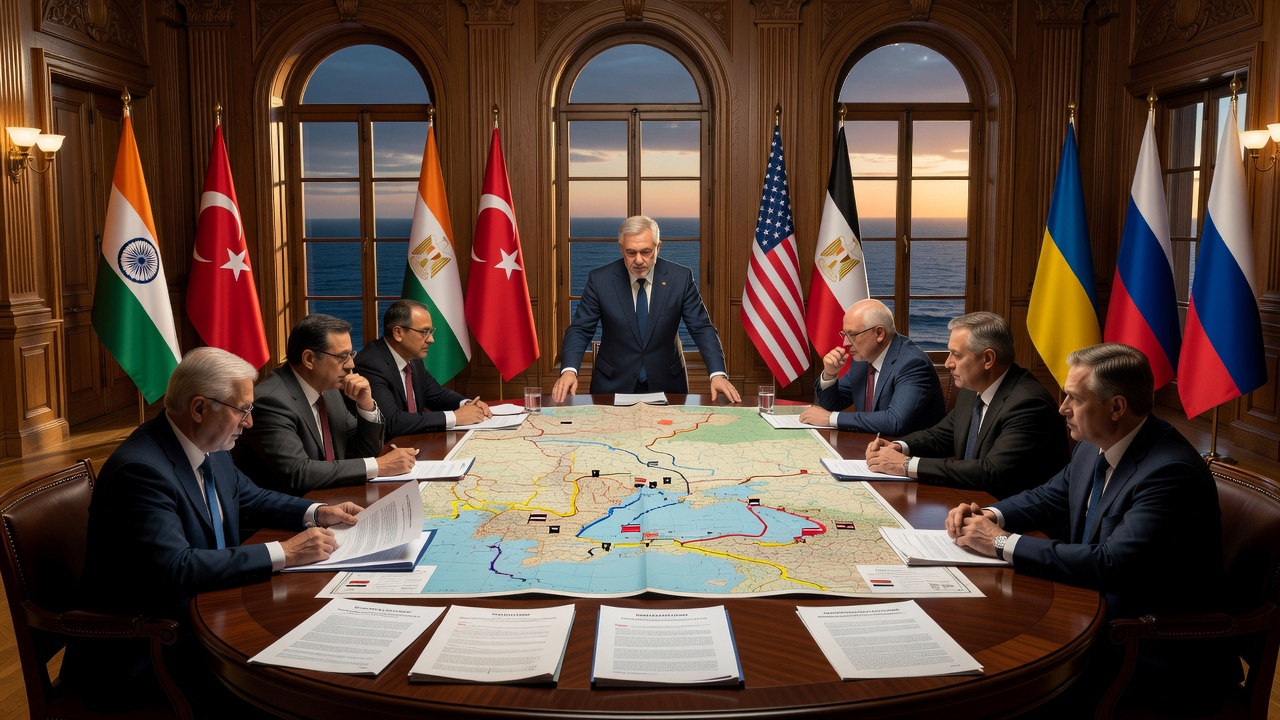
Ukraine has confirmed it is weighing four separate mediation offers, from India, Turkiye, Egypt and the United States, as it searches for ways to limit the war's economic and human toll even as a full peace deal remains out of reach. Foreign Minister Andrii Sybiha disclosed the proposals at a Kyiv briefing, calling India's the most comprehensive. None of the four plans attempts to resolve the underlying territorial dispute; each instead targets specific flashpoints: energy infrastructure, Black Sea shipping and grain exports.
Why mediators are circling the Black Sea
The war's fifth year has brought a shift in tactics, with both sides striking at infrastructure that reaches far beyond the battlefield. Ukraine and Russia together account for a substantial share of global wheat shipments, and attacks on ports have already pushed wheat futures to multi-year highs. Energy infrastructure has become an equally prominent target: Ukraine says it has carried out well over a hundred drone strikes on Russian refineries this year, and outside estimates suggest Russian fuel output has dropped sharply as a result. Combined with reduced Middle East supply, that squeeze has tightened global diesel markets, a pressure point that reaches well beyond the two combatants.
India's interest is partly explained by casualties among its own citizens. Indian seafarers have been killed in Black Sea strikes, as have crew members from Azerbaijan, underscoring that commercial shipping routes now carry risk for countries with no stake in the conflict itself. Analysts argue that oil-price anxiety, not just grain security, is what has pushed several governments to re-engage diplomatically.
What each proposal actually covers
- India: reportedly a three-part plan covering a halt to strikes on energy and port infrastructure, protection of Black Sea grain and energy shipping, and safety guarantees for commercial vessels and crews.
- Turkiye: builds on its 2022 role brokering the Black Sea Grain Initiative with the United Nations; new talks are reportedly being organised for October.
- Egypt: focused on keeping grain shipments moving, reflecting its heavy reliance on Ukrainian grain imports.
- United States: a three-step approach involving a mutual halt to energy strikes, reopening a grain corridor, and a trilateral meeting between Washington, Kyiv and Moscow.
Ukrainian officials say the Indian plan draws on elements of the other three, which may explain why Sybiha singled it out. Still, the plan has not been published, and reporting on its details relies on unnamed sources rather than an official text.
Diplomacy without leverage
Every prior attempt to pause the fighting has unravelled. A US-brokered energy truce in early 2025 collapsed amid mutual accusations of violations. Talks in Istanbul produced no breakthrough. A meeting between the American and Russian presidents in Alaska yielded nothing concrete. Moscow's public response to the latest offers has been polite but noncommittal, while Ukrainian officials say privately that Russia has already rejected India's framework and every other Black Sea ceasefire option put forward so far.
Analysts interviewed on the subject argue that the obstacle is not the choice of mediator but Moscow's underlying calculation. Russia's territorial demands have not softened since the invasion began, and its strategy on the ground, pressuring Ukraine's economy and infrastructure ahead of winter, suggests no urgency to pause. Several observers believe only sustained economic pressure, such as tighter restrictions on Russia's oil exports or reduced Chinese purchases of Russian crude, would meaningfully alter that calculus. Without such a shock, most expect the war to continue for years rather than months.
Why this matters beyond the battlefield
For governments far from the front line, the stakes are concrete: food security, fuel costs and the safety of their own citizens working on commercial vessels. That combination of grain and energy exposure explains why countries with no direct role in the conflict, from New Delhi to Cairo, now see value in offering to mediate even narrow, partial agreements. Whether any of the four proposals produces a durable truce depends less on the sophistication of the plan and more on whether Moscow calculates that continuing the war still serves its interests.