
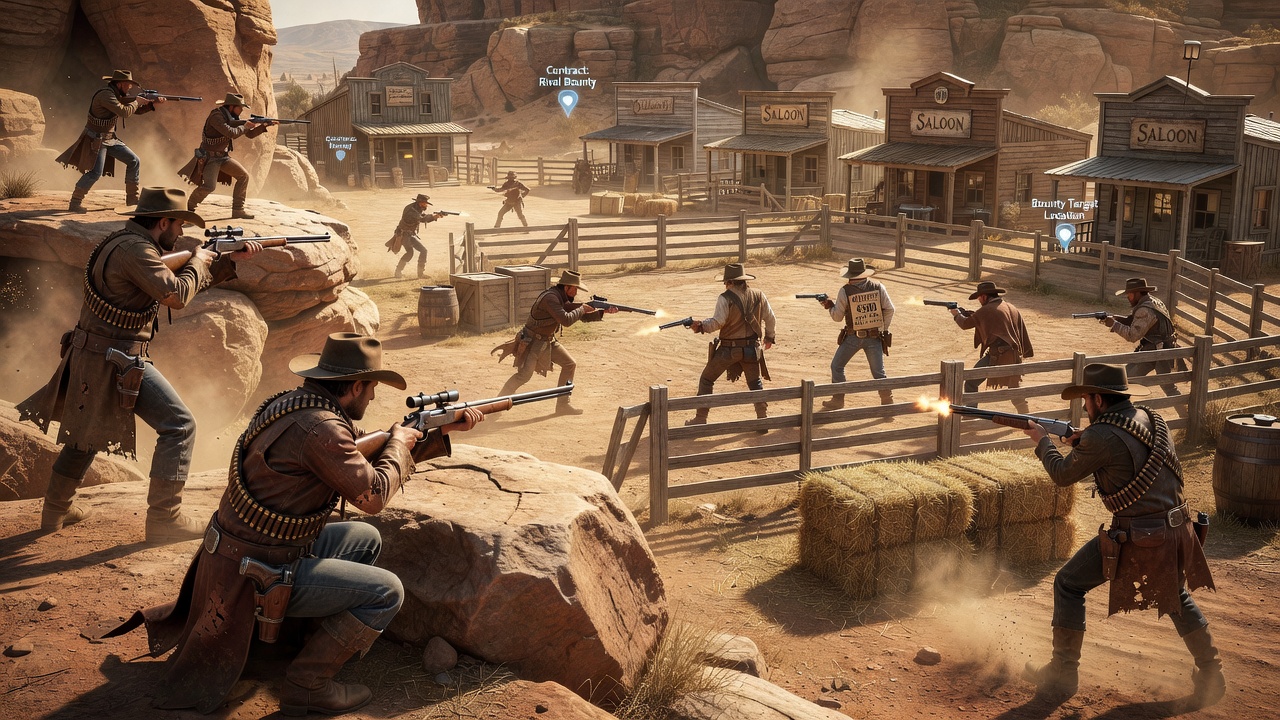
Wild West bounty hunts reward patience over aggression, a fact that catches most newcomers off guard the first time they load into a match. Players who charge in with the biggest gun and the loudest playstyle usually end up dead within the first minute, while those who read the terrain, track their targets, and manage resources tend to walk away with the bounty. This gap between instinct and result is exactly why so many beginners struggle in their opening sessions and why understanding the mechanics before jumping in matters so much.
This guide breaks down everything a new player needs to know, from basic controls to advanced positioning tricks that separate casual players from consistent winners. Before getting into the finer points of combat, it helps to see the game in action; you can check how to play wild bounty showdown to get a feel for the pacing and visual style before committing to a full session. Once you have that context, the tactical advice below will make far more sense and stick with you longer.
What follows is not a surface-level rundown. It covers weapon selection, loadout synergy, map awareness, and the specific habits that turn a shaky first-timer into someone who can hold their own against experienced bounty hunters.
Understanding the Basics of Wild Bounty Showdown
Before any strategy makes sense, a player needs a working knowledge of the game's core loop. Wild Bounty Showdown places participants in a frontier-style arena where the objective shifts between hunting marked targets, defending claimed territory, and surviving against both AI-driven threats and rival players. Knowing how to play Wild Bounty Showdown starts with understanding this dual pressure: you are never just fighting one enemy type.
Core Game Mechanics
The match structure typically rotates through phases - scouting, engagement, and extraction. During scouting, movement noise and visibility matter more than firepower. During engagement, weapon choice and positioning decide outcomes. Extraction phases punish greed; players who linger to loot extra rewards often get caught by faster, more disciplined opponents.
Controls and Movement Fundamentals
Movement in this game rewards deliberate action over frantic clicking. Sprinting generates sound that alerts nearby players, while crouched movement slows you down but keeps you off the radar. Learning to alternate between these states based on your surroundings is one of the first habits a beginner guide should instill.
Objective Types You'll Encounter
Bounty targets vary in difficulty and reward. Some are stationary NPCs guarded by minor threats, others are player-controlled and actively hunting you back. Recognizing the difference early - usually through map markers and audio cues - prevents wasted time and unnecessary risk.
- Stationary bounty targets guarded by low-tier enemies
- Player-hunted contracts that turn the map into a race
- Timed events that reward speed over caution
- Territory control zones that require sustained presence
Essential Wild Bounty Showdown Gameplay Tips
Once the basics click, the difference between an average run and a great one comes down to small, repeatable habits. These Wild Bounty Showdown gameplay tips focus on decisions you can make in the first thirty seconds of any match that pay off later.
Map Awareness and Positioning
High ground isn't just a cliché in this game - it's a measurable advantage. Elevated positions extend your sightlines and reduce the angles enemies can approach from. Beginners who spend their first few matches simply learning sightlines from common vantage points will make faster, safer decisions later.
Resource Management Early On
Ammunition and healing items are scarce by design. Spending every bullet on the first enemy you see is a common beginner mistake. Prioritize headshots or precise hits over spray-and-pray tactics, and always keep a reserve for the unexpected second or third attacker.
Reading Enemy Behavior
AI-controlled enemies follow predictable patrol patterns, while human opponents adapt. Watching how a target reacts to your first shot - whether they flee, flank, or freeze - tells you what kind of player you're dealing with and how to respond.
Wild Bounty Showdown Strategy Guide for Consistent Wins
Tips help you survive individual encounters, but a real strategy guide addresses how you approach the entire match from start to finish. This is where beginners plateau if they don't adjust their thinking beyond moment-to-moment reactions.
Planning Your Route Through the Map
Instead of moving randomly toward the nearest objective marker, experienced players plan routes that pass through cover, avoid open plains, and position them near multiple bounty targets at once. This reduces backtracking and keeps momentum on your side.
Balancing Aggression and Caution
Overly cautious players often run out of time to complete objectives; overly aggressive ones die before they collect a single bounty. The winning approach treats each engagement as optional - if the risk outweighs the reward, disengage and reposition rather than force a fight.
Adapting Strategy to Match Phase
Early-game strategy should favor scouting and low-risk bounties. Mid-game shifts toward securing higher-value targets as competition thins out. Late-game strategy is almost entirely about survival and extraction - winning the shootout means nothing if you die before cashing in.
Wild Bounty Showdown Best Weapons and Loadouts
Weapon choice shapes your entire playstyle, and mismatched loadouts are one of the fastest ways to lose momentum in a match. Wild Bounty Showdown best weapons and loadouts depend heavily on your preferred range of engagement and how much mobility you're willing to trade for firepower.
Best Weapons for Close-Range Combat
Shotguns and revolvers dominate close encounters, particularly in the tight corridors of towns and saloons. Their high damage per hit compensates for slower reload speeds, making them ideal for players who favor ambush tactics.
Best Weapons for Long-Range Engagements
Rifles reward patience and precision. Players who hold elevated positions or open terrain benefit from a rifle's range advantage, though the tradeoff is vulnerability during reloads and a slower rate of fire.
Building a Balanced Loadout
A strong loadout pairs a primary weapon suited to your preferred range with a sidearm that covers the opposite scenario. Carrying a rifle with a revolver as backup, for example, lets you adapt if an enemy closes the distance unexpectedly.
- Shotgun + revolver: aggressive close-quarters build
- Rifle + pistol: versatile mid-to-long-range build
- Dual pistols: mobility-focused build for hit-and-run tactics
Equipment and Utility Items
Beyond weapons, utility items like smoke bombs, traps, or health kits round out a loadout. Beginners often overlook these in favor of raw firepower, but a well-placed trap can neutralize a stronger opponent without a single bullet fired.
Common Mistakes Beginners Make
Recognizing frequent errors early saves hours of frustrating trial and error. Most of these mistakes stem from applying instincts from other shooters that don't translate well to this game's pacing.
Overextending Without Support
Chasing a fleeing target into unknown territory, alone, is one of the fastest ways to walk into an ambush. Patience often beats pursuit.
Ignoring Audio Cues
Footsteps, gunfire in the distance, and environmental sounds all carry tactical information. Players who mute or ignore audio cues miss early warnings that could prevent avoidable deaths.
Neglecting Loadout Customization
Sticking with a default loadout because it feels familiar limits your effectiveness against players who have tailored their weapons to specific situations. Experimenting early, even during casual matches, builds the muscle memory needed later.
Advanced Tactics for Long-Term Improvement
Once the fundamentals are solid, improvement comes from refining decision-making speed and understanding opponent psychology rather than learning new mechanics.
Bluffing and Misdirection
Firing a shot to draw attention away from your real position, or feigning retreat to lure an overconfident enemy into a trap, are tactics borrowed from real tactical combat that translate well here.
Timing Your Engagements
Waiting for an opponent to reload, or for a third party to engage them first, often yields easier kills than direct confrontation. Patience compounds into consistent results over many matches.
Reviewing and Adjusting Your Approach
Treat every loss as data. Noting what went wrong - poor positioning, wrong weapon choice, misread enemy behavior - builds a personal strategy guide more valuable than any external resource.
Frequently Asked Questions
Is Wild Bounty Showdown difficult for someone who has never played a shooter before?
The learning curve is moderate. Movement and aiming mechanics are intuitive, but understanding pacing and objective priorities takes a few matches to internalize. Following a structured beginner guide shortens that adjustment period significantly.
What's the single most important habit for new players to build?
Positioning before engaging. Checking your surroundings and securing an advantageous spot before committing to a fight prevents the majority of early deaths that new players experience.
Should I always carry a rifle for the range advantage?
Not necessarily. Rifles excel in open terrain but become a liability in close-quarters areas like towns or interiors. Matching your weapon to the map's dominant terrain matters more than raw stats.
How do I know when to disengage from a fight?
If you're low on ammunition, healing items, or facing more than one opponent simultaneously, disengaging and repositioning almost always beats forcing the encounter. Survival value outweighs the risk of a potential kill.
Are player-hunted bounty targets worth the risk compared to stationary ones?
They typically offer higher rewards but come with unpredictable resistance since another player is actively defending or fleeing. Beginners should build confidence on stationary targets before pursuing these higher-stakes contracts.
Can loadout choice really change match outcomes that much?
Yes. A loadout mismatched to your playstyle or the map's terrain puts you at a structural disadvantage regardless of skill. Adjusting loadouts based on map layout and personal preference is one of the fastest ways to improve win rates.