
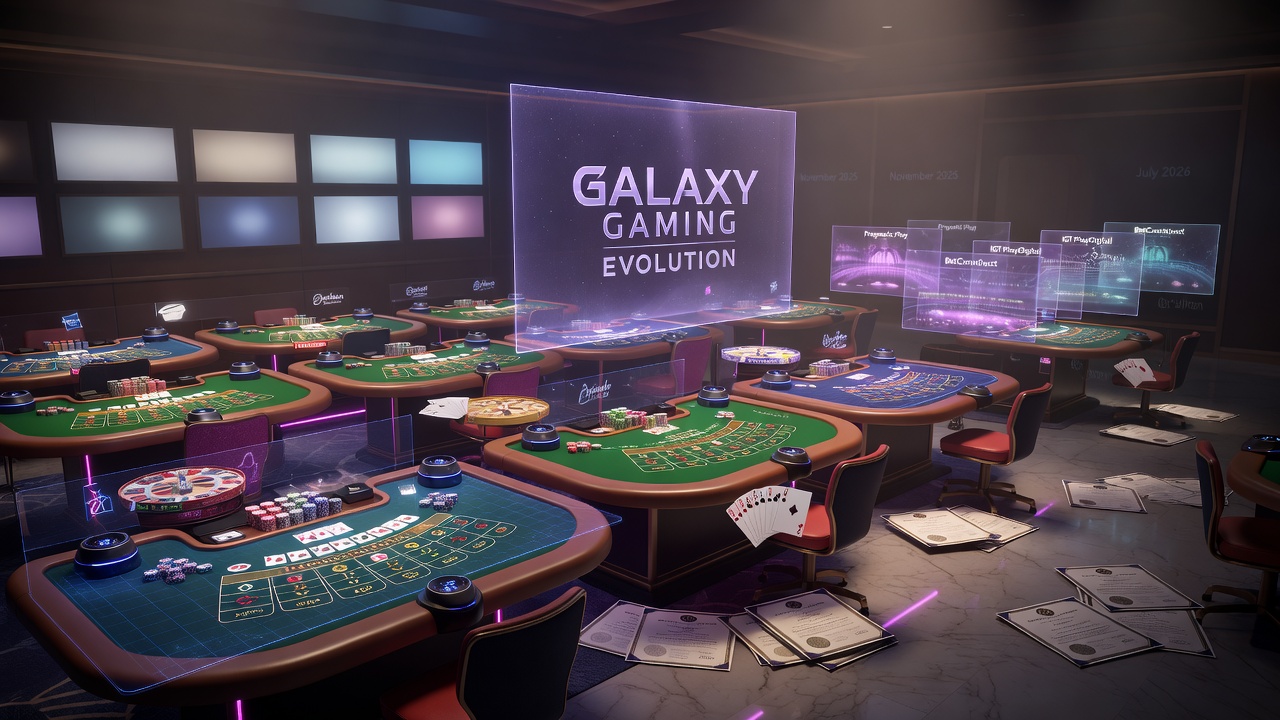
A Las Vegas company that most casino customers have never heard of sits behind many of the card games they play on the pit and online. Galaxy Gaming, Inc., trading under the ticker GLXZ on the OTCQB Marketplace, develops and licenses proprietary table games, side bets, and progressive jackpot systems used by land-based and digital casino operators worldwide. The company now stands at a turning point: it has agreed to be acquired by Evolution Malta Holding Limited, a deal still working its way through regulatory review.
A Content Supplier, Not an Operator
Galaxy Gaming does not run casinos. It builds the intellectual property casinos pay to use - blackjack variants like 21+3 and Lucky Ladies, poker-based games such as Caribbean Stud and Heads Up Hold'em, and baccarat enhancements including EZ Baccarat with its Golden Talons and Divine 9 side bets. This licensing model is common in the gaming-supply sector: rather than competing with casino operators, companies like Galaxy sell them tools to differentiate their floor and increase engagement at the table. The company has also moved into branded entertainment through a multi-year Hasbro licensing agreement, adapting MONOPOLY, YAHTZEE, and BATTLESHIP into casino table formats with progressive features aimed at drawing recognition-driven play.
Technology Layer Behind the Felt
Beyond game content, Galaxy promotes a technology stack built around its Galaxy Operating System, branded GOS Sapphire, which integrates progressive jackpot management, sensor-based tracking through what the company calls Nebula sensors, and digital signage through TableVisions. Features such as Dynamic Progressive, which the company describes as adding randomized multipliers to certain payouts, reflect a broader industry trend: suppliers increasingly compete not just on game rules but on the data and automation layered underneath them. For operators, these systems promise better visibility into table performance and jackpot liability; for regulators, they raise the same compliance questions that apply to any system handling cash-equivalent payouts and player tracking.
Digital Distribution and Licensing Reach
Through its Galaxy Gaming Digital division, the company licenses its table games to online casino platforms, positioning itself as a supplier to the live-dealer and RNG (random number generator) segments of iGaming. It has struck distribution arrangements with firms including Pragmatic Play, IGT PlayDigital, and BetConstruct, placing its branded side bets across thousands of third-party gaming sites. This illustrates how modern casino content moves: a single game designed once can be deployed across many operators' platforms through licensing rather than direct consumer-facing operation. Galaxy says it holds more than 130 gaming licenses across 28 U.S. states and over 30 countries - a regulatory footprint that is itself a competitive asset, since each jurisdictional approval represents time and compliance cost that newer entrants must replicate.
The Pending Evolution Merger
Galaxy Gaming has entered an Agreement and Plan of Merger with Evolution Malta Holding Limited and a merger subsidiary, Galaga Merger Sub, Inc. If completed, Galaxy would become a wholly owned subsidiary of Evolution, one of the industry's largest live-dealer and gaming technology groups. A Form 8-K dated November 25, 2025 confirms the parties extended the outside closing date to July 17, 2026, underscoring how gaming mergers routinely require extended timelines to clear regulatory approval across multiple licensing jurisdictions. The companies have been explicit that completion is not guaranteed and remains contingent on gaming regulators signing off, a standard caveat in an industry where ownership changes at licensed suppliers trigger fresh suitability reviews in every state and country where the company holds approvals.
What the Deal Signals
For an industry watcher, the acquisition fits a pattern of consolidation among content and technology suppliers, as larger platforms acquire proprietary game libraries and distribution relationships rather than building them from scratch. For consumers, the practical experience of playing a Galaxy-branded side bet is unlikely to change overnight regardless of ownership, since gaming content changes are themselves subject to regulatory approval. The deal is, at its core, a business and regulatory story - one that will be decided by licensing authorities and deal terms rather than by shifts in game design or payout structure.